Sunday, April 20, 2014

G. & T. Earle Ltd.

G. & T. Earle Ltd. was a cement manufacturing company in Hull. The firm served as a significant employer in the city over the course of its 157 year history, providing work for several hundred people and by the end of the 19th century it had become one of the premier cement manufacturers in Britain.

The business has its origins in 1809 when brothers George and Thomas founded a company to sell various imported goods from Russia. In 1821 the brothers established a cement company on the banks of the River Humber. The company relocated to larger premises at Wilmington in 1866. Three kilns were set up for cement production at the new site, making a total of around 45 tons of cement per week. A fourth kiln was added in 1869 and production of cement peaked in the early 1870s at around 3000 tons per year.

In 1912, G. & T. Earle amalgamated with other cement companies to form the Associated Portland Cement Manufacturers Ltd. Earles was able to make an exceptionally good deal in the merger, keeping its own identity and preserving a degree of independence.

The company marketed its Pelican brand cement right up until 1966 when the business was wound up. The Wilmington Cement Works was closed down in 1969 and has since been demolished.

Earle's Cement Works, Wilmington, Hull in 1924
 

by Mark Matlach

Sunday, April 13, 2014

A. & R. Tod, Ltd.

Leith has been a port for more than a thousand years and Edinburgh's official port since 1329. Originally Leith was a little more than a mile from Edinburgh, but now the two areas are one urban center.

Over the past decade, the port area has become more upscale as the shipping industry moves to docks on the north side. However, as the picture below shows it was a rougher place during the 1920s.

One of the industries in Leith was the Leith Flour Mills, owned by A. & R. Tod, Ltd. Most of the flour for the mill came from outside the UK—particularly from Canada—as the local wheat was too "soft".

The A. & R. Tod, Ltd. overprint appears to be surprisingly scarce, considering how many customers a large flour mill would have.

 
Leith Mills c. 1922


Resources
Originally published July 1, 2006.

I. J. & G. Cooper Ltd.

I. J. & G. Cooper Ltd. was a manufacturer and wholesaler of children's clothing established in 1823 in Manchester. From 1906 the company had a warehouse at 7 Dale Street which was known as the Children's Fashion House. The company produced children's clothing, baby linen, infant's knitwear and frocks. The business was in operation into the 1950s.

I. J. & G. Cooper Ltd. warehouse at 7 Dale Street, Manchester, built in 1906

by Mark Matlach

Sunday, April 6, 2014

Cooke, Sons & Co.


Cooke, Sons & Co. was a carpet manufacturer established by William Peabody Cooke in Liversedge, Yorkshire in 1795. The company had spinning mills in Liversedge, a matting factory in Hadleigh, Suffolk and a warehouse in London. Carpets were entirely produced on handlooms until 1850.

In 1938 Cooke, Sons & Co. was taken over by another carpet manufacturer called Blackwood, Morton & Sons, who trade today as BMK Carpets Ltd.


Cooke, Sons & Co. Advertising Envelope
Used with 2d embossed 17 September 1891 to Gothenberg

by Mark Matlach

Sunday, March 30, 2014

Charles Bayer & Co. Ltd.


Charles Bayer & Co. Ltd. was a corset manufacturing company, established in the late 19th century in Bath by a German immigrant named Charles Bayer.

In 1892 large four-story premises were established in the city. The red brick building was England's first corset factory, and the first factory in Bath to be built with an integrated electric light supply. The top floor of the building housed a workshop for making suspenders and the printing department. The cutting room was on the third floor; cloth was cut into pieces by a 22ft long cutting machine and girls on either side of the cutter used sewing machines to stick and join the pieces together. The second floor housed the finishing rooms where the products were pressed and ironed. The lower floors contained the stock room, general office and dispatch department – the corsets were shipped all over the world.

As the business grew, Bayer established additional corset factories in Bristol, Portsmouth, Gloucester and London. Bayer's advertisements boasted that his “superfine British corsets for British wearers” were made with the “daintiest French fabrics” and were “as easy fitting as a perfectly cut kid glove, with a complete absence of pressure upon the respiratory organs.”

Bayer's business was all but wiped out in the 1930s, but corset production continued under new owners who, in the 1970s, added lingerie to its lines. The large factory in Bath closed down in 1982, although the building still stands today.

Charles Bayer corset

by Mark Matlach

Sunday, March 23, 2014

Bradford & Sons

William Bradford was a coal merchant in Pibsbury, Somerset from the 1780s. Bradford would transport coal mined in Wales by canal to Bridgwater. The coal would then be moved on by horse and cart to Yeovil and distributed to towns and villages in Dorset, Devon and Somerset.

In the 1850s the company begun by William Bradford became known as Bradford & Sons. As the railway system spread across Britain between 1850 and 1870, it became the new means of transport for heavy goods, and the company expanded along the railway lines with a number of branches and coal depots established.

At the beginning of the 20th century Bradford & Sons entered into the timber business and the building trade. The company continued to expand and following the Second World War it entered into the cereal seed trade and became the first company in the West Country to operate an aircraft crop spraying service.  

In 1963 Bradford & Sons Ltd. made a substantial investment in an animal feeds compounding mill and seed cleaning plant at Crewkerne, Somerset. This was subsequently expanded but, owing to the escalating administrative and technical requirements of the cereal trade, the company ceased processing its own seeds in 1972. In 1977 the company's animal feeds manufacturing business was sold to BOCMS and the rest of the company was restructured. Three separate trading companies were formed: Bradford's Agriculture Ltd., Bradford's Building Supplies Ltd., and Bradford's Coal Ltd. The latter two companies are still active today.


by Mark Matlach

Sunday, March 9, 2014

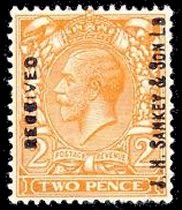
J. H. Sankey & Son Ld.


J. H. Sankey & Son was a brick manufacuring company established in 1857 in Canning Town, London. The company made Sankey's Pure Silica fire bricks, Gannister cupola bricks, and arch blocks.

By the early 1900s the firm was described as a builder's merchant and manufacturer of cement, slates, bricks, tiles and fireclay goods. In the 1920s the company was advertising Sankey's Pyruma putty, which was used for sealing or joining fire bricks, and Tiluma cement, which was used for fixing tiles to fireplace surrounds.

J. H. Sankey traded until at least 1956.

A J. H. Sankey brick


by Mark Matlach